
Unlocking the Power of the Spoken Word: Our Talk for Writing Journey
Writing is one of the most complex tasks we ask of our students, requiring them to juggle transcription, grammar, and creative thought all at once.
To bridge this gap, our primary school is adopting the Talk for Writing (TfW) approach. Developed by Pie Corbett, this method is transforming how our students transition from storytellers to confident, independent writers.
What is Talk for Writing?
At its heart, Talk for Writing is based on the principle that if a child can’t say it, they can’t write it. It moves away from immediate "pen-to-paper" tasks and instead focuses on internalising the language patterns, structures, and rhythms of high-quality texts through oral rehearsal and "story mapping."
The Three Pillars of the Approach
The framework follows a logical, three-stage process that builds confidence at every step:
Imitation: At this stage students learn a text by heart using actions and visual story maps. This allows students to internalise "the bones" of a story and build a rich bank of vocabulary.
Innovation: This involves adapting the known text by changing characters, settings or even events allowing for practice using the structure whilst adding their own creative flair.
Invention: In this final stage students apply what they have learned to write their own original pieces. This is vital as it allows the students to become independent, creative writers with a deep ‘toolkit’ of techniques.
Why This Matters for Our Community
We believe that this approach is important as we are teaching our students to love language. By "talking the text," we see several immediate benefits:
Boosted Confidence: Even our most reluctant writers find success when they already know the story they are about to write.
Inclusivity: The heavy use of visuals and physical actions makes literacy accessible to EAL (English as an Additional Language) learners and those with diverse learning needs.
Vocabulary Growth: Children aren't just reading sophisticated words; they are using them in context daily.
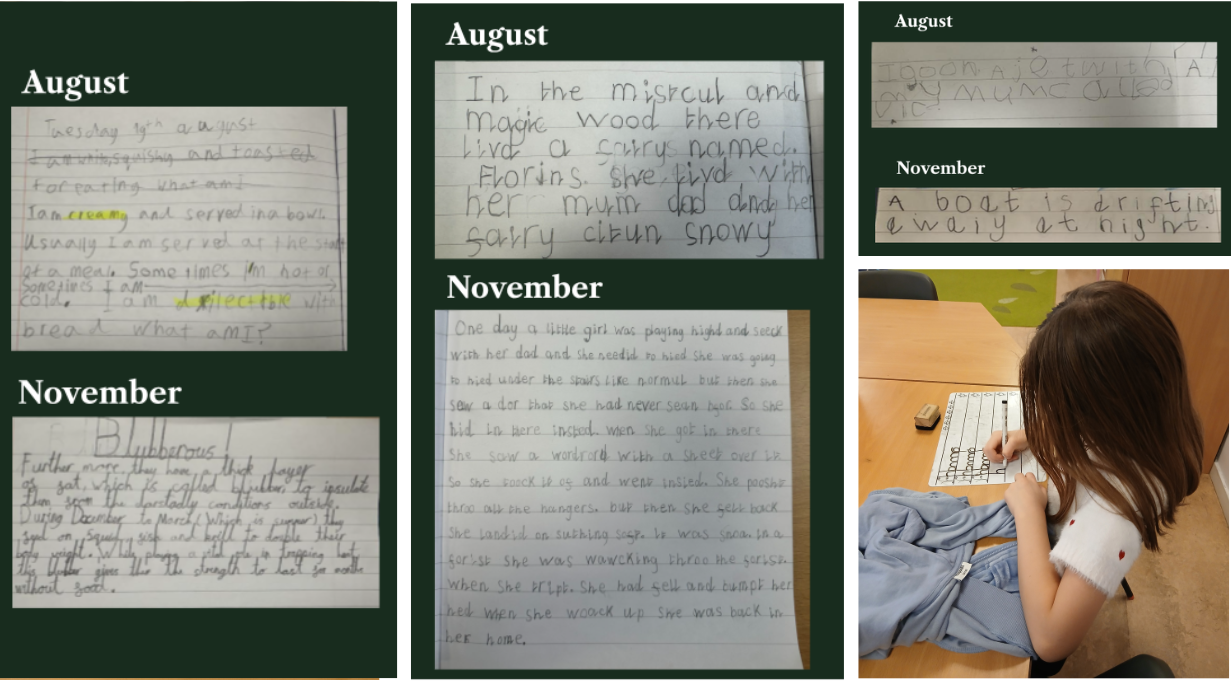
Looking Ahead
As we roll this out across our classrooms, you’ll likely hear your children coming home "retelling" stories with expressive actions or talking about their "story maps." We invite you to encourage this by asking them to tell you the story they have learnt or the one they have created.
